

How do microgrids support energy security?
Energy microgrids are one of the most forward-looking solutions for industrial facilities seeking to improve energy security, stabilize costs, and increase the share of renewable energy sources. They combine flexibility, independence, and efficiency, while significantly reducing the risk of production downtime. Although their implementation requires capital expenditure and a thorough technical analysis, microgrids can prove more cost-effective than relying solely on electricity from the grid - especially in sectors with high and stable energy demand.
What is an energy microgrid?
A microgrid is a local, integrated energy system that can operate both in connection with the public power grid and in island mode, i.e. completely independently. A microgrid integrates multiple energy generation sources such as photovoltaic installations, cogeneration units (including biogas-based systems), energy storage systems, or wind turbines - together with energy consumers, forming a flexible structure managed by a central Energy Management System (EMS).
The key feature of a microgrid is its ability to automatically balance local energy production and consumption and to ensure continuity of supply even in the event of a failure in the central power grid.
What are microgrids used for?
Microgrids were originally developed to improve energy security and supply stability, but their role has expanded significantly over time. Today, they are used, among other things, to:
- increase the resilience of industrial facilities to power outages,
- reduce energy purchase costs by using lower-cost on-site generation,
- stabilize the operation of renewable energy sources through energy storage systems,
- improve power quality and maintain stable supply parameters,
- achieve environmental objectives and reduce carbon footprint.
How does an energy microgrid work?
At the core of a microgrid is an energy management system that analyzes current and forecasted energy demand, the availability of generation sources, and the state of charge of energy storage systems. Based on this data, the EMS determines which sources should be used at any given time.
In practice, a microgrid may change its operating mode several times within a single day - for example, using photovoltaic generation during daytime hours and relying on energy storage or cogeneration during the afternoon peak, when many consumers, including households, significantly increase electricity consumption. When conditions are favorable, the microgrid reduces power drawn from the external grid, and in critical situations it can disconnect from it entirely.
Technologies used in microgrids
The selection of technologies depends on the nature of the facility, its consumption profile, and the availability of energy carriers. The most commonly used solutions include:
- Photovoltaics (PV) – a low-operating-cost energy source that works well with energy storage systems,
- Cogeneration or trigeneration – stable sources of electricity and heat, essential where a high level of energy security is required; trigeneration additionally provides cooling,
- Biogas/biomethane – a stable, dispatchable energy source based on locally available fuel, well suited for integration with cogeneration systems,
- Energy storage systems – increase microgrid flexibility, balance the variability of renewable energy sources, and store surplus energy,
- Wind turbines – applied where wind conditions are stable; they complement photovoltaic installations,
- Control and automation systems (EMS, SCADA) – the “brain” of the entire installation, responsible for cost and technical optimization of microgrid operation.
Advantages of energy microgrids

With the growing number of grid failures, overloads, and the widely reported blackouts in recent years, microgrids allow production continuity to be maintained even when external power supply is unavailable. A facility can operate in island mode, while autonomous sources and energy storage systems ensure stable energy delivery. Thanks to on-site generation, companies also reduce their exposure to wholesale electricity prices and distribution fees. Especially when using cogeneration or energy storage systems, it is possible to shift energy consumption to hours with lower prices or completely eliminate grid consumption during periods of peak tariffs.
When it comes to using renewable energy sources for industrial facilities, many plants face the challenge of variable generation dependent on weather conditions - particularly in the case of photovoltaics. A microgrid makes it possible to integrate renewables with energy storage, increasing electricity self-consumption and improving the project payback period. A high share of energy from cogeneration and renewables also reduces the facility’s carbon footprint and facilitates compliance with ESG requirements, which are becoming increasingly important within supply chains.
How is a microgrid different from own energy sources?
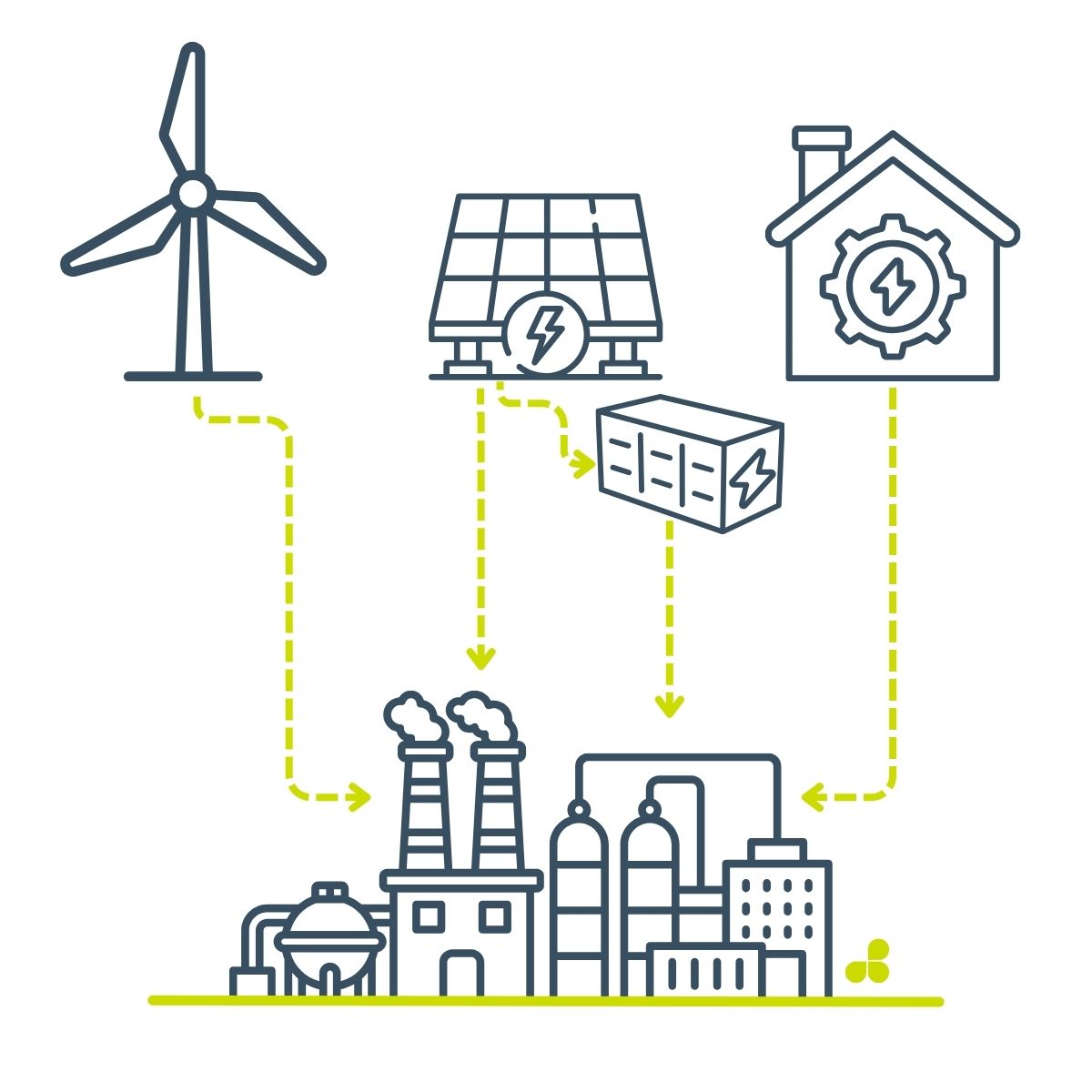
On-site energy sources (PV, cogeneration, generator)
These are single or several point-based generation installations that:
- usually operate independently of each other,
- are not always coordinated in terms of time or cost optimization,
- often have limited island-mode capability (e.g. PV without storage shuts down during grid outages),
- are primarily intended to reduce energy costs rather than manage supply continuity for the entire facility.
In practice, the facility has its own energy sources but remains largely dependent on the grid and its parameters.
Energy microgrid
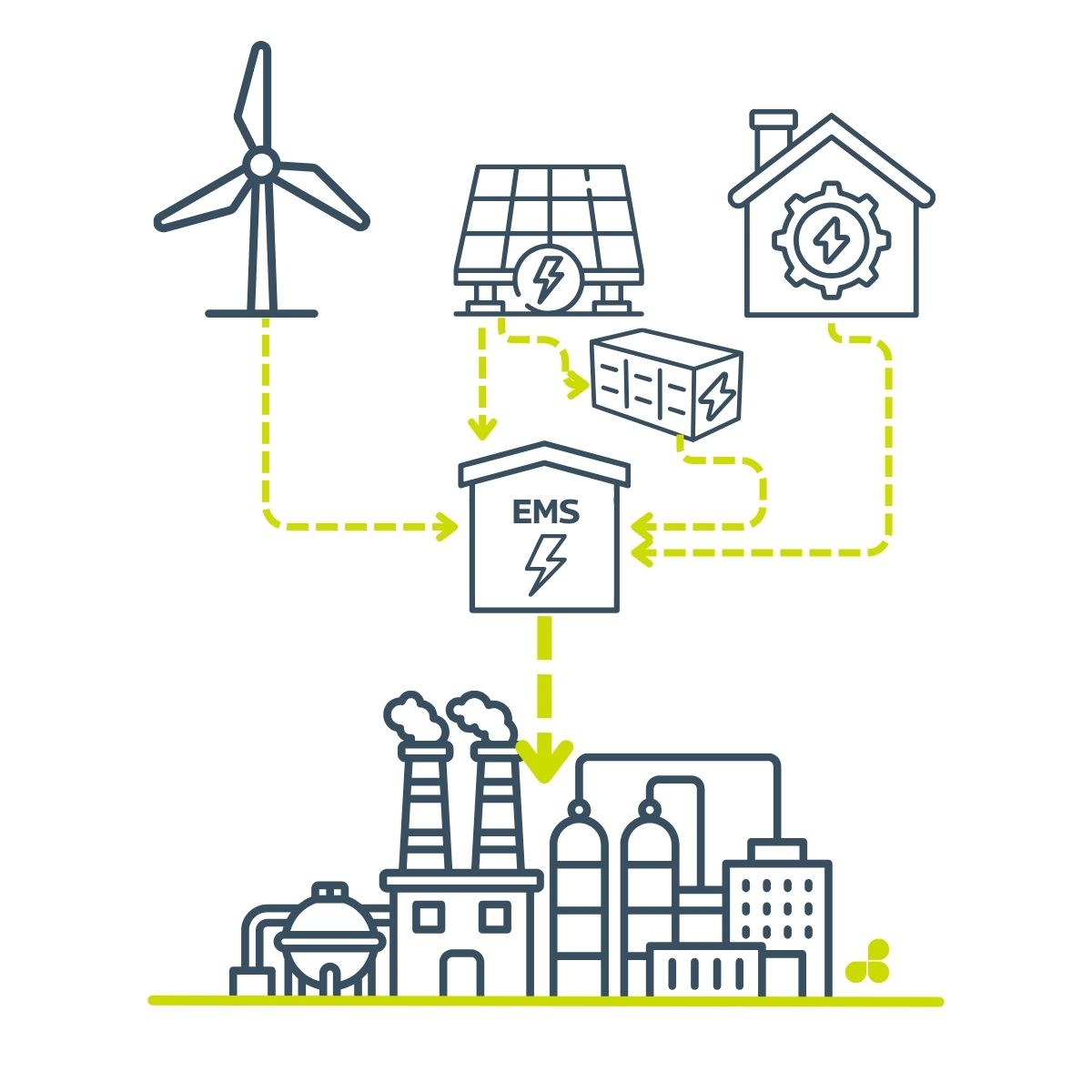
A microgrid is a system, not a collection of devices:
- it integrates multiple sources (PV, cogeneration, BESS, wind) into a single logical structure,
- it is centrally managed by an EMS that balances production, consumption, storage, and grid interaction,
- it enables automatic island operation for the entire facility or its critical areas,
- it optimizes reliability, power quality, and resilience to failures.
Potential risks and challenges
Microgrids are advanced systems that require precise planning and management. Their main challenges include:
- high capital expenditure, particularly for large capacities and energy storage systems,
- design complexity, as improper technology selection can reduce system efficiency,
- the need for advanced control - microgrids require professional operation and integration of multiple components.
However, these risks are becoming increasingly manageable thanks to technological progress and the growing availability of consulting services in microgrid design and operation.
Can microgrids be more cost-effective than grid energy?
In many cases - yes. However, profitability depends on several factors, including:
- the energy consumption profile,
- fuel costs (e.g. gas for cogeneration, availability of renewables),
- market electricity prices and distribution tariffs,
- the ability to utilize heat from cogeneration.
A well-designed microgrid can reduce energy costs by limiting electricity consumption during peak price hours, utilizing low-cost on-site generation, reducing grid fees, and increasing renewable self-consumption. In energy-intensive facilities, the cost difference can be significant—especially when the microgrid is based on cogeneration and energy storage systems that enable cost-optimized operation.
Take a step towards cost-effective decarbonization of your business
Contact usSummary
Local balancing of energy consumption and production relieves the power grid, reduces the risk of infrastructure overloads, and limits the scale of potential failures. With the increasing share of renewable energy sources, microgrids also help smooth fluctuations in energy generation that could otherwise destabilize the power system. As a result, they are becoming an important element of the modernization of the Polish energy sector and of improving its resilience to external factors.
From a business perspective, implementing a microgrid means not only greater independence from the grid, but also a tangible strengthening of energy security. A facility with its own generation and energy storage systems is less vulnerable to supply disruptions, sudden price spikes, and risks related to the condition of the distribution network. A microgrid therefore acts as a “local protective shield”—enhancing resilience, stabilizing costs, and supporting long-term energy and environmental strategies. As such, it becomes a solution that combines security, efficiency, and predictability - the three key pillars of modern energy management in industry.
