
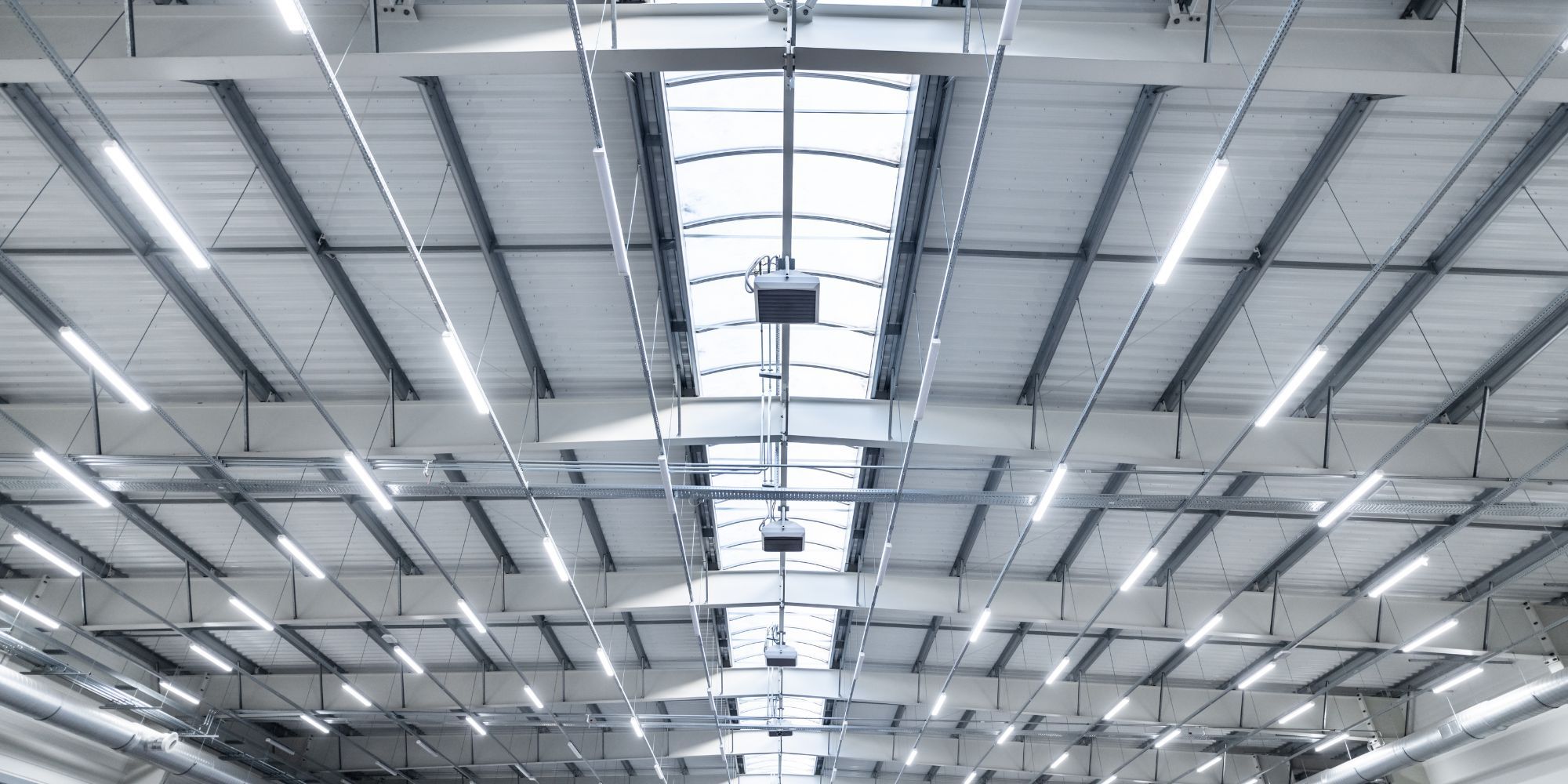
Lighting audit in industrial facilities
Increasing energy efficiency requirements and the need to comply with legal regulations have made lighting audits in industrial facilities a key component of energy management strategies. In this article, we will explore the technical and specialized aspects of this process, including legal regulations, audit scope, measurement methods, benefits, and the implementation of recommendations.
Legal regulations and normative frameworks
Lighting audits in industrial facilities are subject to a complex set of legal regulations and standards. The most important documents include the Energy Efficiency Act and the Regulation of the Minister of Infrastructure regarding the company energy audit. In addition, industrial facilities must comply with lighting standards such as PN-EN 12464-1:2012: Lighting of indoor work places – Part 1: Lighting environment and PN-EN 1838:2013. Moreover, there are various industry-specific lighting requirements for industrial facilities, depending on the nature of the activity and working conditions at the site.

What requirements must lighting meet?
In some industries, especially where visual precision is critical, there are guidelines concerning minimum lighting intensity. This applies to laboratories, production workshops, and assembly operations, for example.
Lighting uniformity in the working area is also important in order to avoid glare, shadows, and eye fatigue. In such cases, standards may specify minimum and maximum variations in light intensity between different areas.
Depending on the application, there are preferred lighting color temperatures, e.g., in warehouses or production halls, neutral color temperature lighting may be preferred to ensure clear visibility of details. In some locations, such as laboratories or exhibition spaces, lighting with a color temperature close to neutral light may be preferred.
In some work environments, there are requirements regarding the safety and resistance of lighting fixtures to extreme conditions, such as high humidity, dust, or chemical exposure. In such areas, the lighting installation should be properly protected and comply with defined safety standards.
There is a growing demand for lighting systems to be designed with energy efficiency in mind and the minimization of electricity consumption. Therefore, industries may require high energy efficiency classes for light sources and the use of energy-saving LED lighting and smart lighting control systems.
All lighting systems must comply with applicable legal regulations and standards related to safety, energy efficiency, and environmental protection. Therefore, they should meet specific standards and hold the appropriate certificates of conformity.
Scope of the lighting audit

The lighting audit in industrial facilities requires a precise definition of the scope of activities. In addition to standard energy efficiency analyses, it is necessary to consider specific industry requirements and applications of industrial lighting, such as lighting intensity, uniformity, and color temperature. In particular, the audit may include:
- analysis of the existing lighting system in terms of the types of light sources, fixture types, installation methods, and control systems, if present;
- verification of electrical infrastructure, i.e., checking the type and condition of cabling and distribution boards, which are integral parts of the lighting infrastructure;
- lighting intensity measurements performed using photometers, commonly known as lux meters. These allow for measurement of light intensity in various points of the facility to assess the lighting level on work surfaces and identify under- or over-lit areas;
- lighting uniformity analysis in different facility zones to identify areas with excessive differences in light intensity, which may affect visibility and work comfort;
- spectral analysis, which enables the evaluation of the spectrum of light emitted by various light sources to assess lighting quality. It can help identify potential issues such as a lack or excess of specific colors;
- energy consumption analysis of the existing lighting system and identification of potential savings through better alignment with facility needs;
- technical condition assessment of the existing fixtures and light sources, including their age, performance, and any damage or operational issues;
- cost analysis related to the operation of the current lighting system, including electricity costs, maintenance, light source and fixture replacement, and failure-related costs;
- modernization recommendations for potential upgrades to the lighting system to improve energy efficiency, lighting quality, and reduce operating costs.
Take a step towards cost-effective decarbonization of your business
Contact us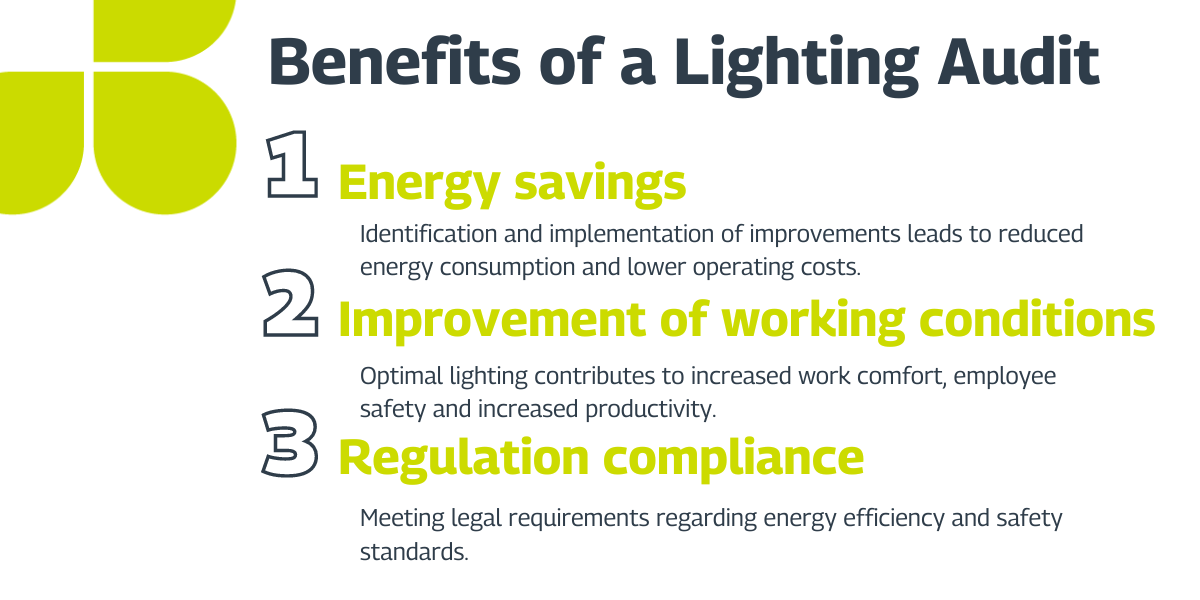
In summary, the lighting audit in industrial facilities is a comprehensive process that not only assesses energy efficiency but also takes into account the specific needs and requirements of various industries. By thoroughly analyzing aspects such as lighting intensity, uniformity, and color temperature, the audit helps ensure optimal working conditions, compliance with standards, and maximized energy savings. This approach not only supports compliance with legal regulations but also contributes to improved employee comfort and safety, while promoting sustainable and efficient energy management in companies.
