
Wind energy
Under current market conditions, wind energy is an important technology for industrial companies. It helps stabilise energy costs through long-term PPA contracts, supports environmental goals, and boosts production competitiveness—provided the contract is properly structured and the company manages its energy consumption profile effectively. Combined with the development of new wind projects and growing availability of green power, it represents one of the key pathways in the energy transition of Polish industry. An increasing number of companies, including those in the industrial sector, are now exploring investment in their own wind sources or long-term contracts for energy supply from wind farms.
What is wind energy?
Wind energy is the generation of electricity from wind using wind turbines. The kinetic energy of moving air drives the turbine rotor, and the generator converts mechanical energy into electrical power. It is a zero-emission technology that does not rely on fossil fuels, supporting climate objectives and reducing the carbon footprint of industrial operations.
Modern wind turbines offer high efficiency and steadily increasing unit capacity - typically from 2 to 7 MW onshore, and even above 10–15 MW offshore. As a result, wind farms can deliver significant volumes of energy into the power system or directly to industrial consumers via PPA mechanisms.
How does a wind turbine work?
The operating principle of a wind turbine is relatively simple, although the technology itself is highly advanced:
- wind drives the turbine blades, which rotate around the rotor axis,
- the rotor transfers energy to the generator, where rotational movement is converted into electricity,
- the control system continuously adjusts the blade pitch and rotates the nacelle to ensure optimal alignment with the wind direction,
- supporting infrastructure - transformers, cable lines, substations - allows energy to be transmitted to the grid or directly to the end user.
Turbines begin operating at a minimum wind speed (the cut-in speed) of around 3 m/s, and automatically shut down at very high wind speeds above roughly 25 m/s to prevent damage.
Onshore and offshore – what’s the difference?
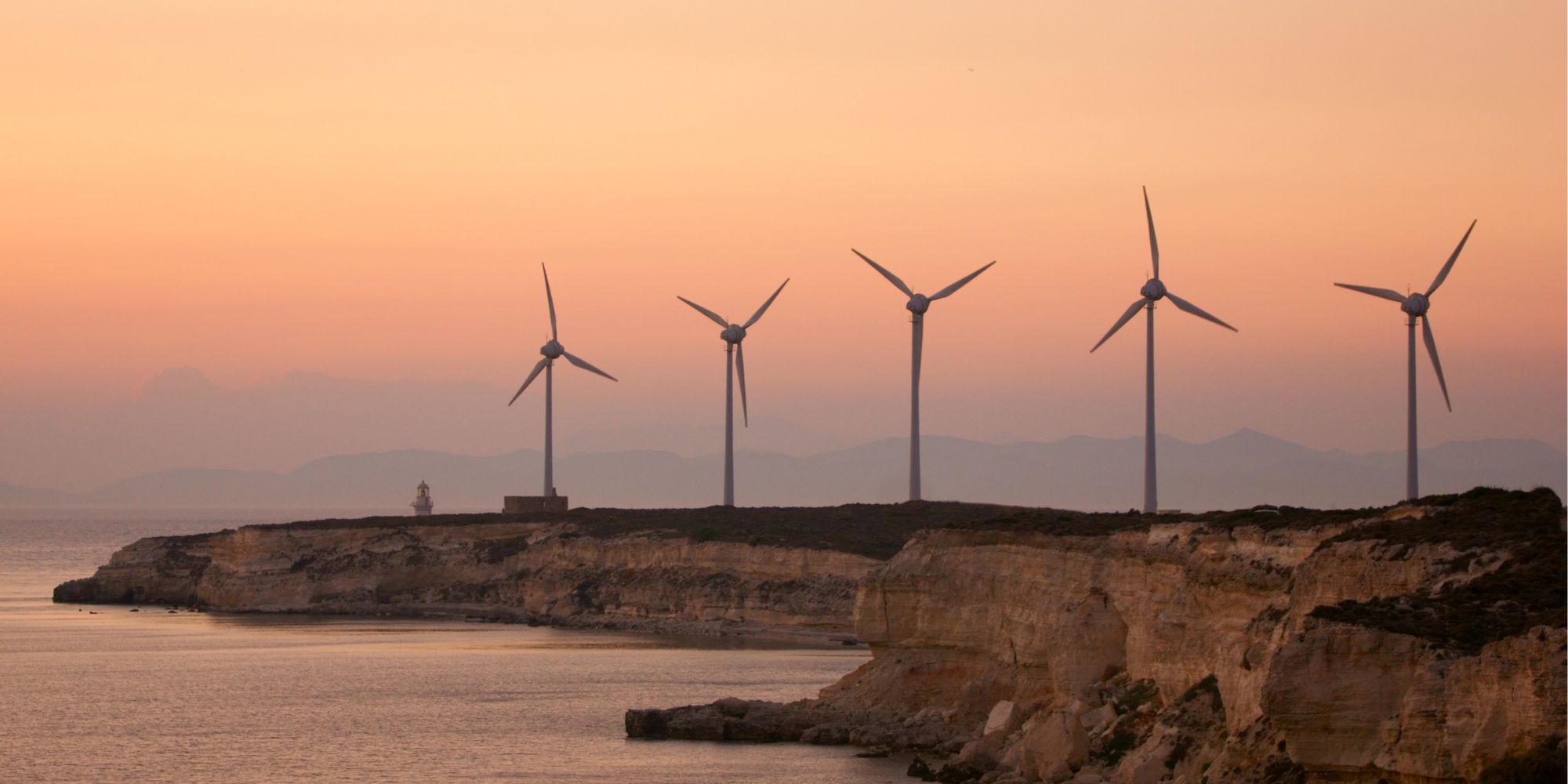
Onshore wind energy
Onshore refers to turbines installed on land. This is the most widespread form of wind energy in Poland. Key advantages include:
- lower project costs compared to offshore,
- shorter investment timelines,
- easier construction and maintenance logistics,
- potential to locate installations close to energy-intensive facilities as on-site sources.
The main challenges are compliance with setback requirements from buildings and local environmental and social considerations. The largest onshore wind farm in Poland is the Potęgowo project - 98 wind turbines with a total capacity exceeding 250 MW.

Offshore wind energy
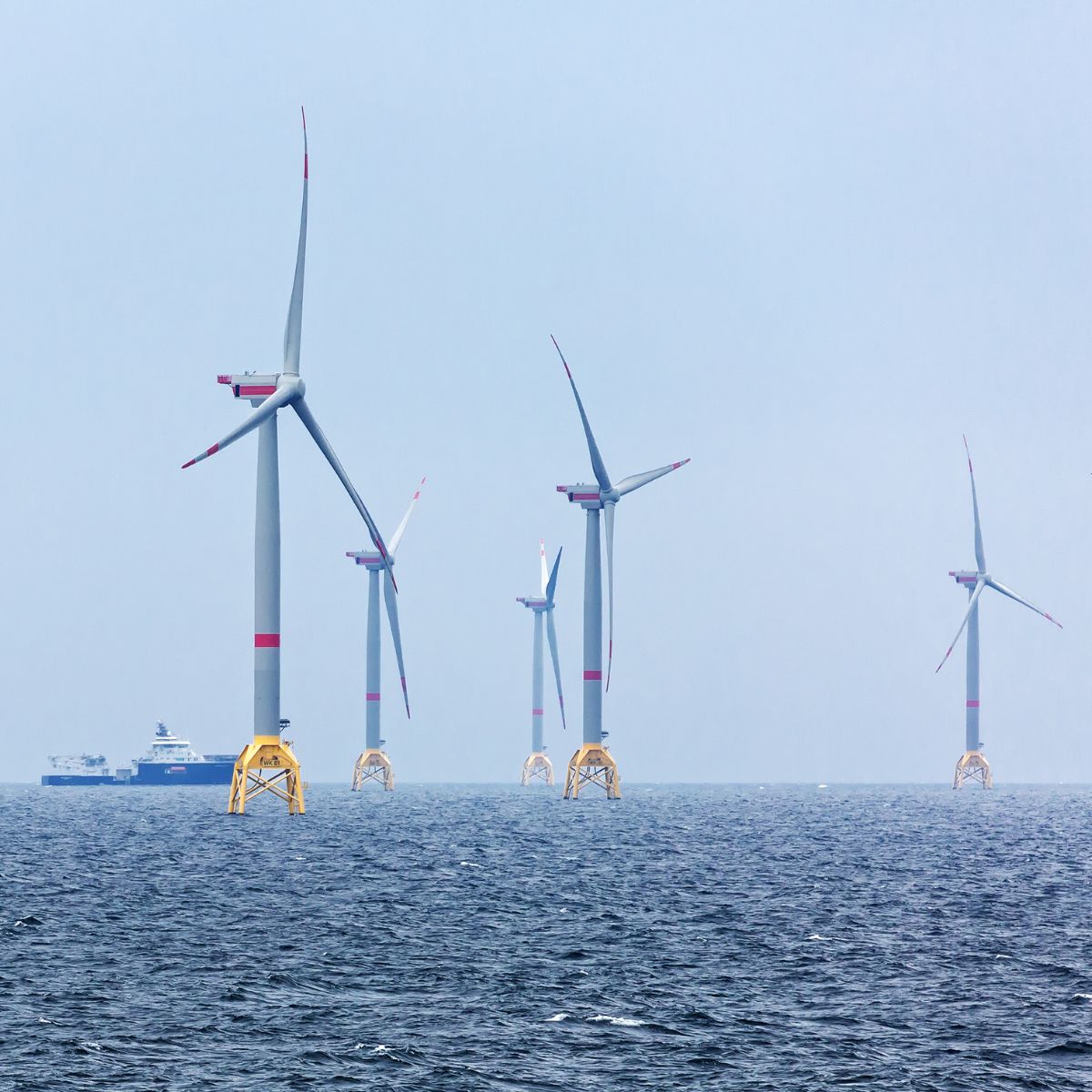
Offshore refers to turbines installed at sea. Offshore projects are characterised by:
- higher operational efficiency (greater energy yield) due to stronger and more stable winds,
- high unit capacity, enabling large-scale projects,
- significant investment costs resulting from complex construction and maintenance conditions,
- the need for extensive grid infrastructure, such as subsea cables and offshore and onshore substations.
Poland is currently developing an extensive programme of wind farms in the Baltic Sea, which could become a major component of the national energy mix within the next decade and a key source of green energy for industry. One of the flagship projects, Baltica 2 - developed by PGE Group and Ørsted - plans the installation of 107 turbines in the Polish sector of the Baltic Sea. It is the largest offshore wind energy project in Poland in terms of generation capacity.
Does wind energy make sense for industrial companies?
From an industrial perspective, wind energy offers clear business and operational value today. Long-term wind-based PPAs help stabilise costs and reduce exposure to volatile market prices, which is particularly important for companies with large and predictable energy needs. Poland benefits from strong wind conditions, enabling turbines to achieve high energy yields and offer attractive long-term pricing.
At the same time, wind energy is one of the most effective ways to reduce carbon footprint. The rapid development of the PPA market gives companies access to numerous projects and flexible cooperation models. In favourable locations, wind turbines can even be installed directly at the plant site, further reducing energy costs.
PPA and cPPA Contracts – Power Purchase Agreements
Read the articleWind energy in Poland and Europe
Europe is currently the global leader in offshore wind development. Projects such as the UK’s Hornsea complex or large farms in the German North Sea demonstrate investment scales reaching several gigawatts of installed capacity in a single region.

Although Poland started later, it has one of the strongest wind potentials in the region—both onshore and offshore. Estimates suggest that domestic onshore potential could exceed 30 GW if favourable location regulations are maintained, while offshore potential in the Baltic Sea is assessed at over 20–28 GW due to strong wind conditions, shallow waters and relatively easy access to grid infrastructure. As a result, wind energy has the potential to become one of the key pillars of Europe’s energy transition, and Poland has a real opportunity to join the group of countries that base a significant share of their energy mix on stable, predictable and scalable wind power generation.
Take a step towards cost-effective decarbonization of your business
Contact usSummary
The development of wind energy in Poland will increasingly align with the needs of industry, which is seeking stable energy prices and effective ways to reduce CO₂ emissions. The expanding project pipeline, liberalisation of turbine location regulations and the rapid growth of offshore wind make wind power one of the most promising energy sources for businesses. Technological progress - larger turbines, improved production forecasting systems and integration with energy storage - further enhances installation performance and strengthens the economic case for investment.
In the long term, wind energy will play a crucial role in building a low-emission and price-resilient energy system. For industrial companies, this translates into competitive advantage through lower operating costs, secure energy supply (in the case of on-site turbines) and compliance with sustainability and ESG requirements. As the PPA market matures and wind farms continue to expand, wind power will become one of the foundations of Poland’s industrial energy transition, enabling companies to operate more predictably, cost-effectively and sustainably.
