
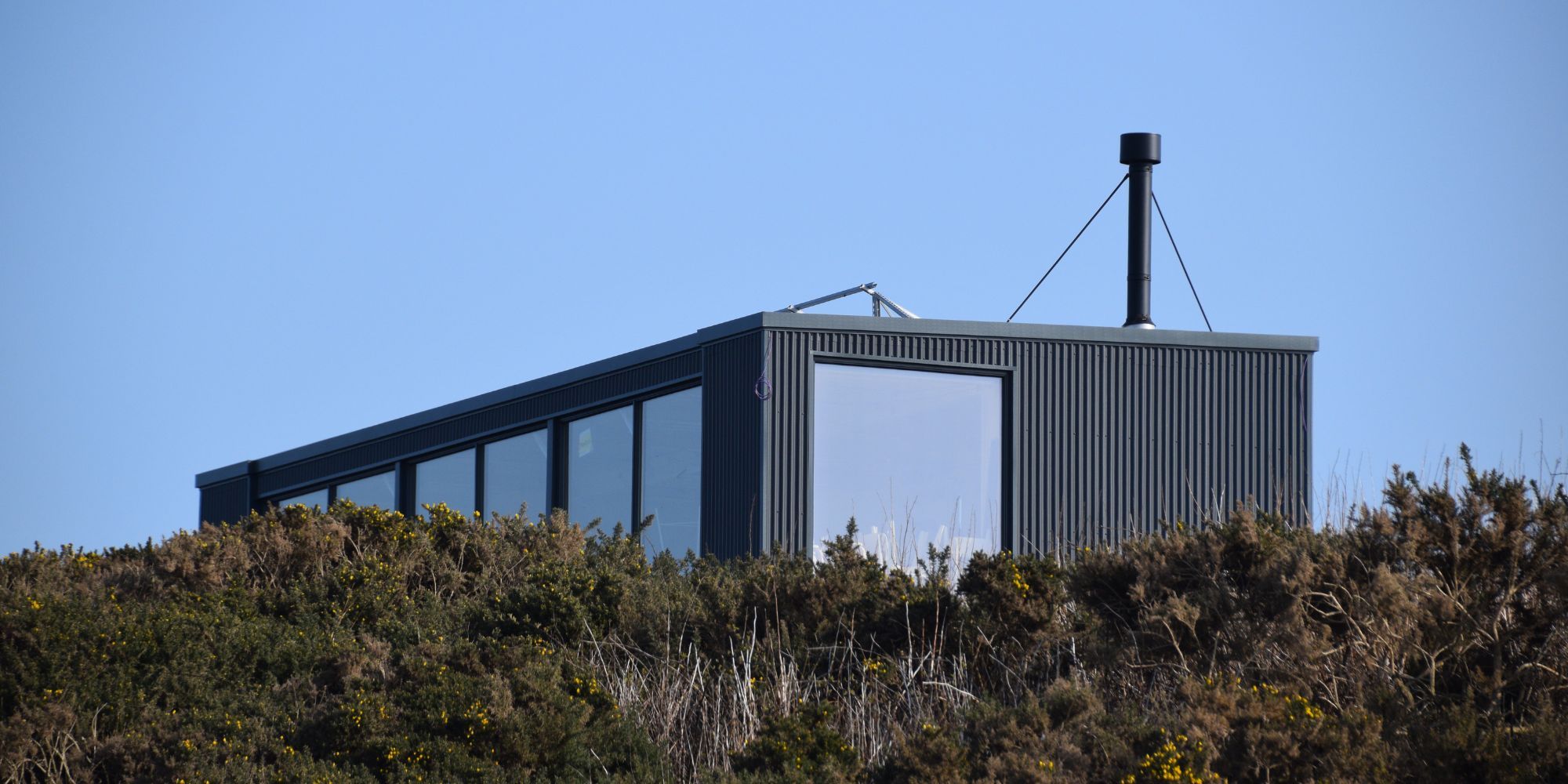
Off-grid – own energy sources
Off-grid energy sources operating in an off-grid or island configuration are gaining popularity as a solution for facilities striving for energy independence and power security. They enable continuous operation even in the event of a power outage, and thanks to the diversification of power sources, they offer partial independence from fluctuating grid prices. Although implementing an off-grid system requires careful planning and analysis of energy needs, in the long term it translates into greater stability, control over energy consumption, and resilience to external disruptions.
What is an off-grid energy source?
An off-grid energy source is an installation that can operate completely independently of the external power grid. This means that the building or infrastructure powered by such a system does not require connection to the national grid – all the energy needed is generated locally.
An off-grid system can be based on various generation technologies, most often using a combination of:
- photovoltaics (PV),
- cogeneration systems,
- wind turbines,
- biogas plants,
- generators (as backup sources),
- as well as energy storage, most often in the form of lithium-ion batteries.
Characteristics of off-grid systems
The most important feature of an off-grid system is energy self-sufficiency. Unlike traditional prosumer installations (on-grid), an off-grid system does not transfer surplus energy to the public grid or draw energy from it in the event of a deficit. This means that the most important element in planning any off-grid installation is energy balance – the system must be designed so that energy production and storage meet the facility's demand at every moment.
Another characteristic of off-grid systems is that they do not require a contract with a grid operator, eliminating transmission costs and fixed fees. They are characterized by a high level of independence – they operate even in the event of a power grid failure – and require precise energy management, including monitoring production, consumption, and storage status.
Grid independence in times of crisis
Energy independence is one of the greatest advantages of off-grid systems. In situations such as:
- grid failures caused by extreme weather conditions,
- planned outages,
- intentional disconnections due to power constraints,
- energy or political crises,
off-grid installations allow for the full functionality of a plant, farm, or critical infrastructure. This is particularly important, for example, for farms with production dependent on continuous power, industrial plants operating continuously, and facilities remote from the grid (shelters, research stations, seasonal buildings). Independence means greater security – both for businesses and individual users.
How to design an off-grid energy system?
Preparing an off-grid system requires thorough, multi-stage planning. The process begins with an energy demand analysis – determining how much energy the facility consumes daily, weekly, seasonally, and year-round. Both the instantaneous power demand (kW) and total energy consumption (kWh) must be considered, as well as temporal variability, such as higher consumption in winter due to heating or in summer due to air conditioning. This will allow for appropriate system capacity selection and preliminary determination of the type or combination of energy sources that best meet the facility's needs.
After selecting the energy source, an important step is designing the energy storage system. Batteries should be selected to meet peak demand and, in the case of renewable energy sources, weather dependency, to provide adequate backup time for key processes. To increase the reliability of the entire system, it is also worth considering a backup source – for example, a diesel- or biofuel-powered generator that automatically starts in emergency situations.
How to select energy sources?
Diversification is a crucial aspect of any off-grid system. It involves utilizing several different energy sources, which increases supply security and system stability. Diversifying sources makes the system less susceptible to external factors, such as a lack of sunlight or calm winds.
We discussed how to select energy sources to ensure a continuous and stable supply to the plant in our article on blackouts:
/en/knowledge-base/how-can-industrial-plants-protect-themselves-against-blackoutsCogeneration as a local power source
One of the local power sources that can operate in an isolated environment is cogeneration, which involves the simultaneous production of electricity and useful heat within a single process. Gas or biogas cogeneration systems are particularly effective where, in addition to electricity, there is also a constant demand for heat – for example, in industrial plants, food processing plants, farms, or service facilities. Their significant advantage is stability – unlike renewable energy sources, they are not dependent on weather conditions, making them a suitable base power source for an off-grid system. Cogeneration also aligns with the concept of energy efficiency, enabling the maximum utilization of primary energy and reducing transmission losses.

Backup in the form of an energy storage system is, of course, an extremely convenient solution, but not the cheapest. This also depends on how companies operate. However, today, despite everything, we are still in the transition period, until everyone wants to be carbon neutral or achieve net zero, and the solution is cogeneration systems designed for continuous operation.
We currently operate several such units. [...] In the event of a power outage, the plant operates in island mode from the cogeneration unit, only occasionally reducing the demand of some smaller loads. However, when power from the grid returns, the system automatically reverts from island operation to grid operation. This is a solution that, once implemented, completely eliminated the problem of storms, winds, floods, local flooding, and various situations that used to wake us up at night, when we had to react and remotely switch the system. Today, it operates fully automatically and is exceptionally stable.
Take a step towards cost-effective decarbonization of your business
Contact usSummary
What do your own energy sources offer?
Having your own power sources means not only independence but also greater control over the entire energy system of a facility. Above all, it allows you to be independent from the instability of the power system and the costs of purchasing energy from the grid. Users gain the ability to optimize energy consumption, consciously manage load, and in many cases also reduce CO2 emissions if the installation is based on renewable energy sources or biogas. Having your own power sources also increases the infrastructure's resilience to external disruptions – failures, power constraints, or blackouts – ensuring production continuity, process safety, and significant financial savings, especially when avoiding costly downtime is considered.
