
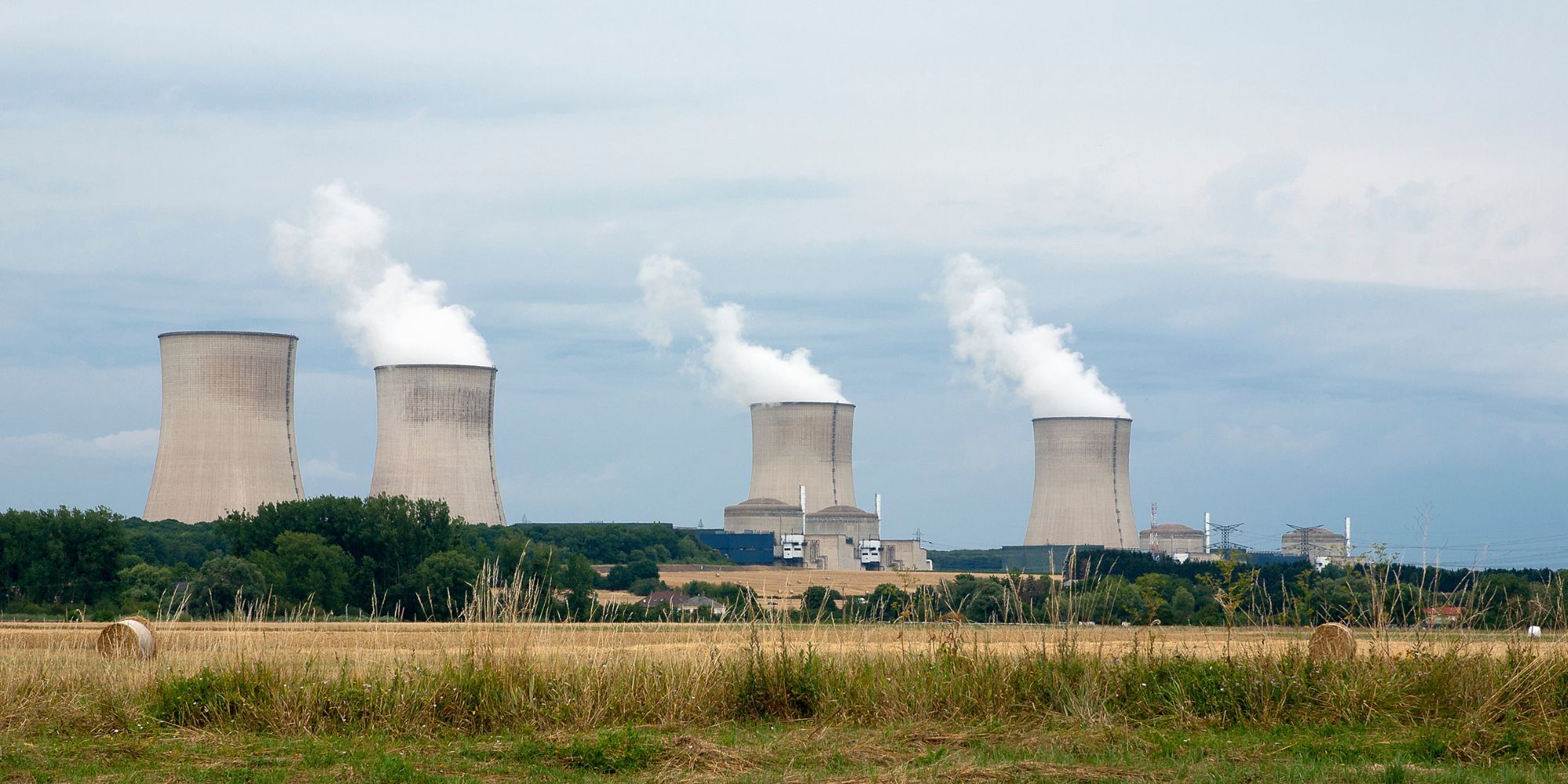
Nuclear power plants
Nuclear power plants are among the most important and forward-looking sources of electricity in the world. Although they evoke a variety of emotions - both positive and negative - their role in the energy transition and the reduction of greenhouse gas emissions continues to grow. How does a nuclear power plant work, how does it differ from other energy sources, and what are its advantages and disadvantages?
What is a nuclear power plant?
A nuclear power plant is a facility where electricity is generated using the kinetic energy of steam produced from heat released during the fission of atomic nuclei. Unlike coal-, gas-, or oil-fired power plants, the energy source is not the combustion of fuel but a physical process that occurs within the atomic nucleus - most commonly involving uranium-235 or plutonium-239. This fuel is, of course, consumed, but in a way that is not currently classified as emission-producing.
The process involves bombarding the atomic nucleus with neutrons, causing it to split into two smaller nuclei and release a large amount of thermal energy along with additional neutrons. These neutrons then initiate further fission events, creating a so-called chain reaction. To maintain full control over the process, control rods are placed in the reactor core to regulate the number of neutrons and therefore the reactor’s power output.
How is energy produced in a nuclear power plant?
Nuclear power plants operate by harnessing the energy released during the fission of atomic nuclei, typically uranium-235 or plutonium-239. The process unfolds in several stages:
- fission reaction – in the reactor core, a neutron strikes a uranium nucleus, which splits into two smaller nuclei, releasing additional neutrons and a large amount of heat.
- sustaining the chain reaction – the released neutrons trigger further fission events. Their number is controlled by control rods made of neutron-absorbing materials (e.g., cadmium, boron), which can be inserted or withdrawn from the core to regulate the reactor’s output.
- steam generation – the heat from the fission reaction warms the working fluid (usually water). Depending on the reactor type:
- in PWR (Pressurized Water Reactor) systems, water in the primary loop is kept under high pressure so it does not boil; it transfers heat to water in the secondary loop, where steam is generated;
- in BWR (Boiling Water Reactor) systems, water boils directly inside the reactor, producing steam.
- turbine rotation – the steam flows onto the blades of a steam turbine, causing it to spin.
- electricity generation – the turbine is connected to a generator that converts mechanical energy into electrical energy.
- steam condensation – after passing through the turbine, the steam enters a condenser, where it cools down and turns back into water. This water returns to the system in a closed loop.
As a result, a nuclear power plant operates similarly to a conventional thermal power plant, with the key difference being that heat comes not from burning fossil fuels but from nuclear fission.
Nuclear power plant – stages of energy production
The operating principle of a nuclear power plant resembles that of a traditional thermal power station - both aim to produce steam that drives a turbine and generator. What differs is the method of heat generation.
- fission reaction – a controlled nuclear reaction in the reactor core releases thermal energy,
- heating the working fluid – the thermal energy heats water or another coolant; depending on the reactor type, this occurs under different pressures and in separate loops,
- steam production – the hot coolant transfers heat to water in the secondary circuit, producing steam that drives the turbine,
- electricity generation – the spinning turbine is connected to a generator that produces electricity,
- cooling and closed-loop circulation – after the turbine, steam enters the condenser, where it liquefies and returns to the system.
The entire process takes place in a closed system, minimizing losses and environmental emissions.
Nuclear power compared to other energy sources

Compared with conventional coal or gas power plants, nuclear power plants produce significantly lower CO
On the other hand, nuclear power differs from renewable energy sources (RES) in terms of operational continuity. Nuclear reactors can operate uninterrupted for many months, providing so-called baseload power - a stable supply of energy independent of weather conditions. In contrast, wind and solar plants depend on weather and time of day, which necessitates energy storage systems or grid balancing mechanisms.
Safety in nuclear power plants
Concerns about nuclear energy primarily relate to safety and radioactivity. Although radioactive substances are indeed generated in the reactor, they are strictly isolated and stored under controlled conditions. Modern nuclear power plants are designed with multiple layers of protection from biological shielding to emergency core cooling systems.
Following the Chernobyl (1986) and Fukushima (2011) accidents, safety standards have increased significantly. Today’s Generation III and IV reactors feature so-called passive safety systems, which can automatically shut down the reactor in the event of an emergency, without human intervention or external power.
It is worth noting that radiation levels around an operating nuclear power plant are lower than natural background radiation in many regions of the world. This means nuclear plants are safe for people and the environment, as long as operational rules and monitoring procedures are followed.
Radioactive waste and its disposal
During operation, nuclear power plants generate radioactive waste, primarily spent nuclear fuel and worn reactor components. Although the volume of this waste is small, especially compared with the waste from coal-fired plants, it requires appropriate handling.
Radioactive waste is classified into three categories:
- low-level (e.g., protective clothing, filters) – after a short storage period, it can be disposed of like regular industrial waste,
- intermediate-level – requires thousands of years of isolation,
- high-level – primarily spent fuel containing highly radioactive isotopes.
Currently, spent fuel is stored in cooling pools and later in special dry storage containers. Some countries (e.g., France, Japan) reprocess this fuel, recovering uranium and plutonium for reuse. In the long term, this waste is destined for deep geological repositories, where it will remain safely isolated for hundreds of thousands of years.
Advantages of nuclear power plants
Nuclear power plants offer numerous advantages, encouraging more countries to pursue nuclear energy development:
- low CO2 emissions – virtually zero greenhouse gas emissions during operation, supporting climate goals,
- stable energy supply – reactors can operate continuously for months, delivering energy regardless of weather conditions,
- high efficiency – one ton of uranium yields as much energy as millions of tons of coal,
- low fuel consumption – nuclear fuel is highly concentrated, reducing transport and storage costs,
- long operational life – nuclear power plants can operate for 60–80 years with proper upgrades.
Disadvantages of nuclear energy
Nuclear energy also has its limitations and challenges:
- high investment costs – building a nuclear power plant requires enormous financial resources and years of preparation,
- long project timelines – from investment decision to reactor start-up may take 10–15 years,
- radioactive waste management – despite effective storage methods, long-term disposal remains controversial,
- risk of accidents – although very low, the potential consequences can be severe,
- public distrust – concerns about radiation and past accidents continue to influence public opinion.
Take a step towards cost-effective decarbonization of your business
Contact usSummary
For many countries, including Poland, the development of nuclear energy may become a key component of the energy system transformation. Nuclear power plants can provide a stable and clean energy source that complements variable renewable energy sources.
Nuclear power plants are technologically advanced facilities capable of generating vast amounts of energy with minimal greenhouse gas emissions. Although their construction and operation involve high costs and challenges related to waste management, their importance in combating global warming and ensuring energy security is undeniable. Even in systems with high shares of renewable energy, the classic rotating mass of nuclear power turbines remains useful for system stability. While they cannot be deployed in excessive numbers, as they are not highly dynamic systems, for countries like Poland their presence is ultimately unavoidable.
